Emergency preparedness has an image problem. Search for it and you will find shelves of freeze-dried food, expensive gadgets and lists that seem written for people expecting the end of the world. Most families aren’t preparing for that. They want to get through a two-day power outage, a boil-water notice or a big storm without panic, and without spending money they don’t have.
The good news is that a useful kit is mostly made of ordinary things, and you probably own half of it already. Here is how to build one gradually.
Start with a plan, not a shopping cart
Before buying anything, have a short conversation with everyone at home. Twenty minutes at the dinner table covers the basics:
- What is most likely where you live? Power outages, storms, flooding, extreme heat or cold, wildfire smoke. Your local risks decide your priorities.
- How will you reach each other? Write down key phone numbers on paper. Phones die, and few people remember numbers anymore.
- Who is your out-of-town contact? When local lines are overloaded, it can be easier to reach someone farther away. Everyone checks in with that person.
- Where will you meet? Pick one spot near home (for a fire) and one outside your neighborhood (if you can’t get home).
- Who needs extra planning? Babies, older relatives, anyone who uses medication or medical equipment, and pets.
Water comes first
Ready.gov, the U.S. government’s preparedness site, recommends planning for one gallon of water per person per day, for several days, for drinking and sanitation. For a family of four, three days means 12 gallons. That sounds like a lot, but store-bought water in sealed containers is inexpensive and stores well. Buy it a little at a time if you need to.
Keep it somewhere cool and dark, and check the dates when you review your kit. Remember pets need water too.
We cover water storage, a pantry you will use and power outages step by step in Affordable Family Emergency Preparedness
Food you will actually eat
The best emergency food is food your family already likes and that doesn’t need a refrigerator or much cooking. Think canned beans, soups, tuna, peanut butter, crackers, cereal, dried fruit and shelf-stable milk. Add a manual can opener, because an electric one is useless in a power outage.
A simple trick: buy one or two extra items each time you shop, and keep them together on one shelf. Eat the oldest ones and replace them, so nothing expires unnoticed.
Check what you already own
Before buying anything else, walk through your home with a list. Many families find they already have:
- Flashlights and batteries (test them)
- A first aid kit, even if it needs restocking
- Blankets and warm clothes
- Garbage bags, plastic ties and moist towelettes for sanitation
- A wrench or pliers for turning off utilities
- Phone chargers and a power bank
- Paper, pencils, books and games for kids
Gather these into one or two bins or bags so they are in the same place when you need them. Only buy what is genuinely missing.
Fill the gaps in order
If you are building the kit over several months, a sensible order is:
- Water and a few days of food
- Light: a flashlight per person and spare batteries
- Any prescription medicines and a stocked first aid kit
- A battery-powered or hand-crank radio for news when the internet is down
- Copies of important documents in a waterproof bag
- Some cash in small bills, since card readers may not work
Power outage safety
Two things are worth knowing before the lights go out.
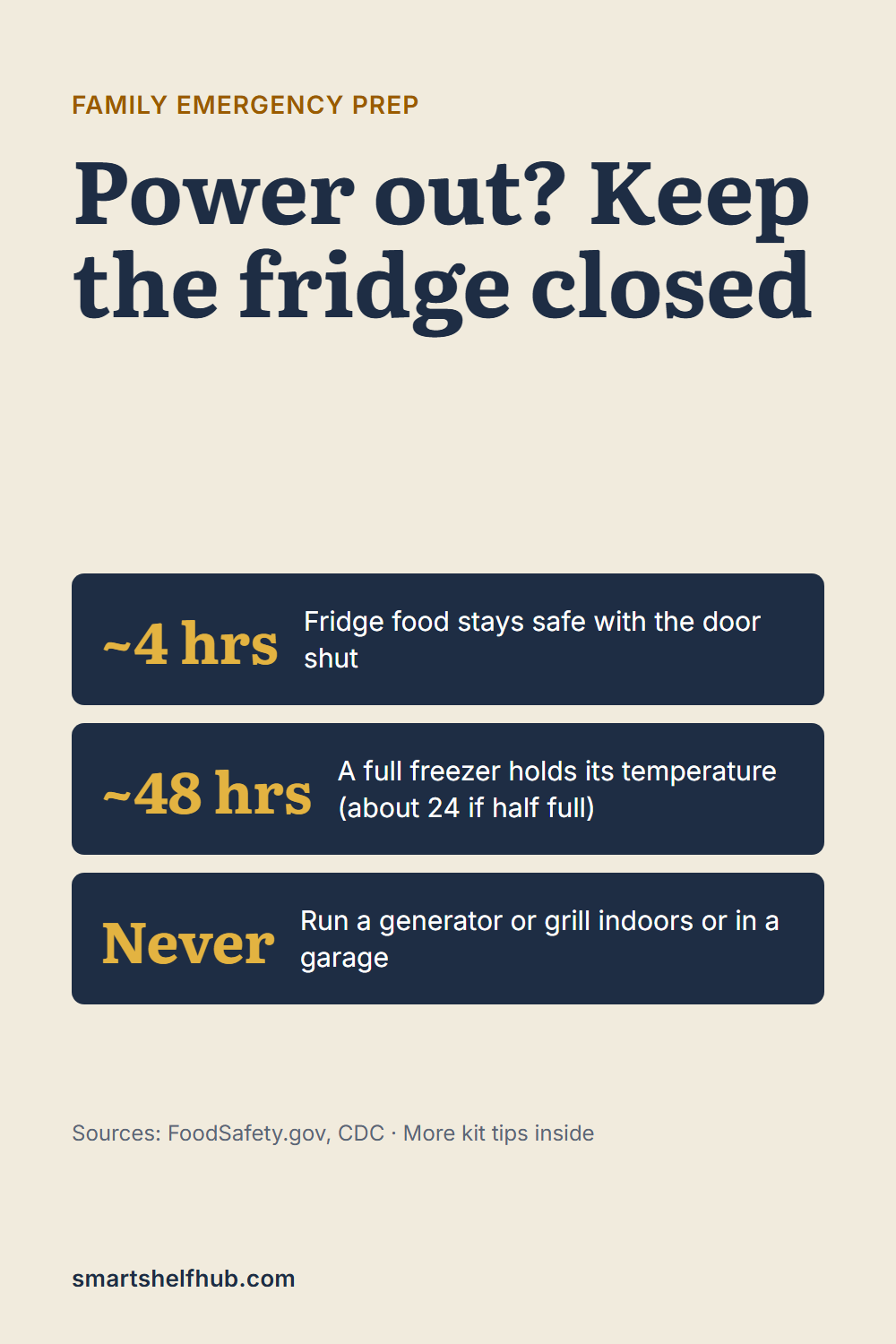
Food safety: According to FoodSafety.gov, a refrigerator keeps food safe for about 4 hours if the door stays closed. A full freezer holds its temperature for about 48 hours (24 hours if half full). Opening the door less is the single most useful thing you can do.
Carbon monoxide: The CDC warns never to use a generator, grill, camp stove or other fuel-burning device inside a home, garage or basement, or near an open window. Carbon monoxide has no smell and can kill. If you plan to use a generator, learn where to place it safely before you need it, and consider a battery-powered carbon monoxide alarm.
Know your utility shut-offs
Find your main water shut-off valve, your gas shut-off and your electrical panel, and show the adults and older kids in your home where they are. You don’t need to use them to benefit from knowing. If you ever turn off the gas, a professional should be the one to turn it back on.
Keep your papers reachable
Make copies of IDs, insurance policies, medical information and important contacts. Keep one set in a waterproof bag with your kit. A printed list of phone numbers is worth more than you would expect when phones are dead.
Review it twice a year
Pick two easy-to-remember dates, such as when the clocks change, to check your kit. Replace expired food, water and medicine, test the flashlights, update phone numbers and look at whether your family’s needs have changed.
In an emergency, always follow instructions from local officials.